

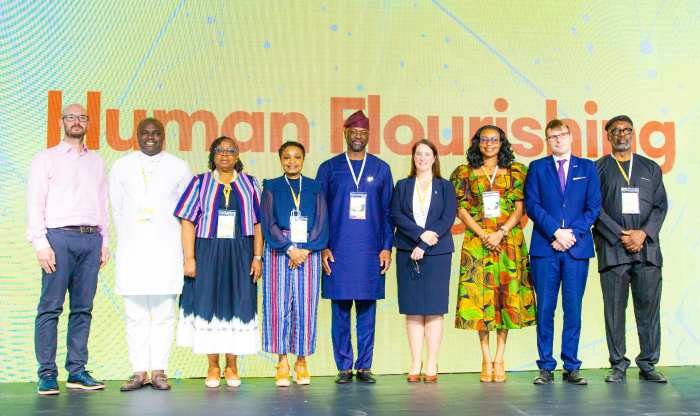
Wellington College International Lagos has brought together leaders from education, technology, government and business to discuss how young people can thrive in an increasingly artificial intelligence (AI)-driven world.
The inaugural Thought Leadership Forum, held under the theme Human Flourishing in the Age of AI, explored how schools can combine academic excellence with the values, skills and human qualities young people need to succeed in the future.
The event also provided an opportunity to examine how education systems can respond to rapid technological changes without losing sight of human development.
Wellington College Lagos Outlines Its Vision for Education
The forum took place at the Metropolitan Club in Lagos. It attracted representatives of the Lagos State Government, the British Deputy High Commission, Alaro City and Rendeavour, Wellington College Education, alongside parents, educators and other stakeholders.
Wellington College International Lagos is part of the global Wellington College Education network. Drawing on its British educational heritage, the school will open in Alaro City, Lagos, in September 2027.
The school’s approach is guided by the vision of Education for Human Flourishing. This philosophy recognises that education should go beyond academic qualifications and examination results.
Instead, it should help young people understand the world, make responsible decisions, adapt to change and contribute positively to society.
Furthermore, this vision is also reflected in Wellington College Education’s Human Flourishing in the Age of AI manifesto. The manifesto draws on the Organisation for Economic Co-operation and Development (OECD)’s Education for Human Flourishing framework, published in November 2025 in partnership with the International Baccalaureate.
Five Competencies Young People Need in the Age of AI
The framework identifies five core competencies that schools should develop alongside traditional academic subjects.
They include:
- Understanding the world: Developing knowledge and understanding of society and the environment.
- Appreciating the world: Building the ability to recognise and value different perspectives and experiences.
- Adaptive problem-solving: Learning to respond creatively and effectively to new challenges.
- Ethical competence: Developing the judgement to make responsible and morally sound decisions.
- Acting in the world: Applying knowledge and skills to make meaningful contributions to society.
Building on these competencies, Wellington College Education aims to encourage a wider conversation about what it means to be an educated person in the 21st century.
Also, the forum raised important questions about the future of schooling. These included how schools can balance mathematics, science and reading with essential human skills, and how students should be assessed in an AI-enabled world.
Other questions focused on preparing young people to serve their communities and redesigning schools to give teachers more time for individual coaching.
In her welcome address, Mrs Christine Haslett, Founding Headmaster of Wellington College International Lagos, stressed the importance of developing character, curiosity and a sense of purpose alongside academic excellence.
She also highlighted the shared responsibility of schools, families and society in preparing young people for the future.
AI Is Changing How Young People Learn and Work
Delivering the keynote address, Chris Rothwell, Founding Director of the Wellington College Education Institute of AI, examined how artificial intelligence is changing education and the opportunities available to young people.
He highlighted the need to prepare students to think independently, exercise sound judgement, develop creativity and use emerging technologies responsibly.
According to Rothwell:
“AI is changing not only how we work and learn, but the opportunities available to us and the choices we make.
“The decisions we take about education today will shape whether young people can genuinely benefit from those changes or simply struggle to keep pace with them.
“Human flourishing must therefore be central to how we prepare the next generation, not an aspiration we return to after technological progress.”
The forum also featured a specially recorded address by Sir Anthony Seldon, Founding Director of Wellington College Education and a British educational thinker, historian and author.
Most importantly, his contribution examined the purpose of education in an age of artificial intelligence.
He emphasised the importance of developing young people who can adapt to change, understand themselves and others, exercise sound judgement and build meaningful relationships.
Nigerian Leaders Discuss the Future of Education
A high-level panel discussion titled The Future of Education in the Age of AI explored the practical implications of artificial intelligence for teaching, learning and student development.
The panel featured Chris Rothwell; Folasade Adefisayo, Principal Consultant and CEO; Iyinoluwa Aboyeji, Founding Partner of Future Africa; and Jadesola Adedeji, Co-Founder of STEM METS.
Yinka Akinkugbe moderated the discussion.
Iyinoluwa Aboyeji spoke about the importance of turning knowledge into practical skills. also Aboyeji emphasised the need to teach young people how to identify problems, take initiative and develop solutions.
He said: “In the age of AI, the skill that distinguishes talent is not knowing but building. Our children need to learn early what it takes to lead their peers in combining AI with deep customer insight to build real solutions to real problems.
“I was delighted to share lessons from our journey building Talent Nation into one of the largest AI engineering workforces in the world.”
Lagos Government Calls for Digital Skills in Schools
Representing the Permanent Secretary of the Lagos State Ministry of Basic and Secondary Education, Mrs Abisola Dokunmu-Adegbite, Mrs Oyindamola Martins, Director of ICT at the ministry, delivered a goodwill message.
She noted that artificial intelligence was transforming how people access knowledge, how teachers deliver lessons and how students experience learning.
She also stressed that education must move beyond traditional teaching methods to respond to technological developments.
According to Martins:
“The rapid advancement of Artificial Intelligence is transforming virtually every aspect of human life, and the education sector is no exception.
“We are witnessing a new era in which technology is reshaping how knowledge is accessed, teaching is delivered, learning is experienced, and educational outcomes are achieved.
“As a Ministry, we recognise that the future of education must go beyond traditional teaching and learning methods.
“We must embrace innovation, equip our teachers with relevant digital skills, and prepare our students with the knowledge, creativity, critical thinking, problem-solving abilities and digital competencies required to thrive in a technology-driven society.”
Preparing Young People for an AI-Driven Future
Wellington College International Lagos prepares to open in September 2027. This forum represents its contribution to discussions about the future of education in Nigeria.
The central message was that academic excellence alone may not be enough to prepare young people for a world increasingly shaped by artificial intelligence.
Students will also need creativity, independent thinking, ethical judgement, adaptability and the ability to turn knowledge into practical solutions.
Through its global vision of pioneering education to serve and help shape a better world, Wellington College International Lagos says it will continue to combine academic excellence, responsible technological innovation and human development.
Ultimately, the challenge for schools will be to ensure that as technology becomes more powerful, the human qualities that make education meaningful are not left behind.